Alert (06/23/2026): Our Bluefield FM 88.5 signal is experiencing technical difficulties and is off the air. Our engineers are actively addressing the issue. Thank you for your patience.
On this West Virginia Week, the world’s largest transportable Ferris wheel arrives in Charleston, the SNAP ban on soda is blocked, and we look at an effort to expand local medical care through EMS.
Rising Above Appalachian Stereotypes for a Higher Education
Listen
Share this Article
While it’s no longer politically correct to use racist, or gender-related remarks that stereotype groups of people, what about negative West Virginian or Appalachian stereotypes?
Appalachians are commonly stereotyped as white, lazy, tobacco smoking, overall-wearing, poor farmers with poor dental hygiene, no indoor plumbing, and no shoes.
So how does that influence the pursuit of an education? Well it depends on the individual Appalachian mindset. The conversation about the connection and possible impact continues with this second report.
Appalachian Stereotypes and the Impact on Student Success
Director of Retention at Concord University is Sarah Beasley. It’s her job to basically keep students enrolled and graduated at the university.
Beasley recently hosted a forum called, Appalachian Stereotypes and the Impact on Student Success.
Beasley’s interest grew out her dissertation research in Mingo County. She looked at college access and the success of rural first generation students. Beasley asked college bound or current college students to share any positive or negative stereotypes they know, about West Virginia or Appalachia.
PART TWO:
Meet two West Virginians that were treated ‘different’ while in college. Find out how they reacted.
PART ONE:
0924Stereotypes1WEB.mp3
Listen to hear two West Virginians describe how they were spoken to because of their Appalachian background.
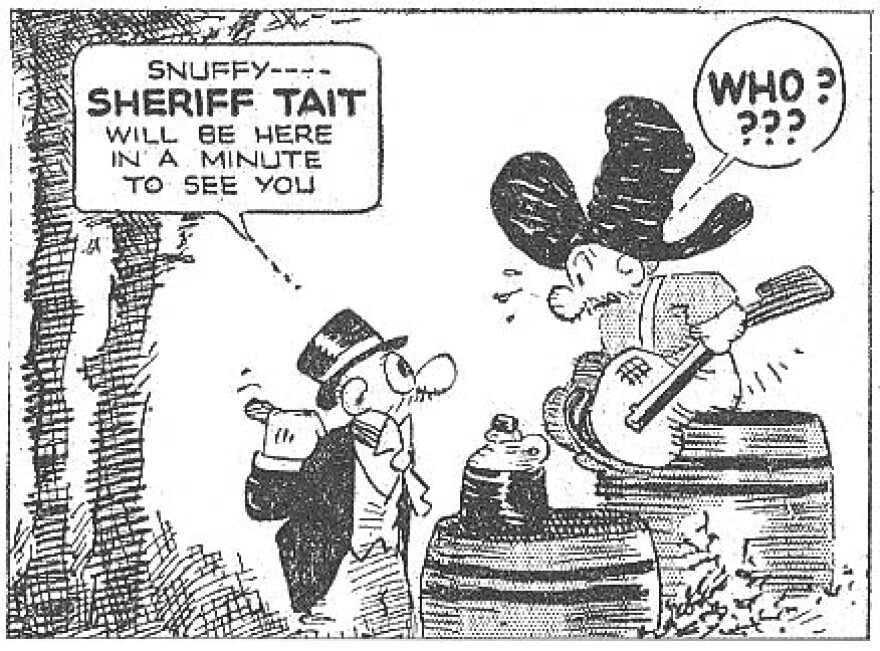
Credit King Features / https://seriewikin.serieframjandet.se/index.php/Bild:Barney_Google.JPG. Licensed under Fair use of copyrighted material in the context of Barney Google via Wikipedia – https://en.wikipedia.org/wiki/File:Bgoogle.jpg#mediaviewer/Fi
/
https://seriewikin.serieframjandet.se/index.php/Bild:Barney_Google.JPG. Licensed under Fair use of copyrighted material in the context of Barney Google via Wikipedia – https://en.wikipedia.org/wiki/File:Bgoogle.jpg#mediaviewer/Fi
Add WVPB as a preferred source on Google to see more from our team
This week, some folks are working to preserve the memory of Bristol, Virginia’s Black Bottom, a largely African American community wiped out by urban renewal. Also, small food producers embrace digital technology for the humble farm stand. And, kudzu; it’s coming for us.
Urban renewal in the last century was supposed to revitalize struggling cities, but it often sacrificed Black neighborhoods and business districts, like Black Bottom in Bristol, Virginia. Inside Appalachia’s Mason Adams spoke with organizer Tina McDaniel about “The Souls of Bristol’s Black Bottom,” a project in Bristol that remembers the community through interpretive signs, public art and digital storytelling. McDaniel says learning about Black Bottom was a revelation.
Construction is underway for the America 250 Wheel, the world's largest portable Ferris wheel and a centerpiece of West Virginia's America250 celebration.